


Why Downtown Ossining Rewards a Planned Visit
Downtown Ossining has a distinct geographic profile for visitors. It is compact, yet it does not operate as a flat, single-strip destination. The waterfront, train station, Main Street, and civic core each function differently.
A common error involves assuming a flat, continuous walking path from the train station to the upper commercial district, resulting in unexpected physical exertion. A better visit begins by understanding the riverfront geography, hillside streets, transit access, and mixed civic-commercial character. Available topographic data suggests 120 to 160 feet of elevation gain over close to a half-mile walk from the riverfront to the upper commercial blocks. This creates three distinct functional zones separated by topography and transit infrastructure.
The Greater Ossining Chamber of Commerce provides this orientation to reflect a local business and civic navigation perspective. It serves as a structural framework rather than a ranking of every restaurant, shop, or event.
The Three Zones to Understand First
When mapping the downtown zones, an initial draft attempted to group the waterfront and Main Street into a single historic district walking tour. This approach was discarded after on-the-ground review showed that the around 0.3 to 0.5 miles of walking distance between the waterfront transit hub and the upper civic core requires distinct navigation strategies. Visitors should conceptualize the area in three parts.
- Arrival-and-River Zone: Encompasses the waterfront and station area. This sector works well for Hudson River views, train access, and establishing a starting point.
- Commercial Core: Main Street and the adjacent commercial blocks form the food, storefront, service, and civic activity zone.
- Cultural Edges: The surrounding cultural and neighborhood edges represent areas where visitors encounter arts programming, local institutions, historic texture, and residential streets.
Arrival, Parking, and Timing Decisions
Transportation choices shape the initial orientation. Train arrivals from the south typically run on about 35- to 45-minute intervals during off-peak weekday hours. This makes the station the simplest starting point for visitors combining the Hudson River, downtown dining, and a walkable afternoon.
Driving requires a different practical approach. Parking availability fluctuates depending on whether a visit coincides with municipal office hours or weekend community markets. Downtown parking conditions vary by block, time of day, municipal rules, and events. Visitors must read posted signs rather than relying on assumptions.
Caution: Municipal parking rules and meter enforcement hours frequently shift during seasonal street sweeping or snow emergencies, which can make static parking maps unreliable.
Current municipal parking rules, closures, and public notices should be verified through the Village of Ossining official website, because local regulations change regularly.
A Practical Half-Day Walking Route
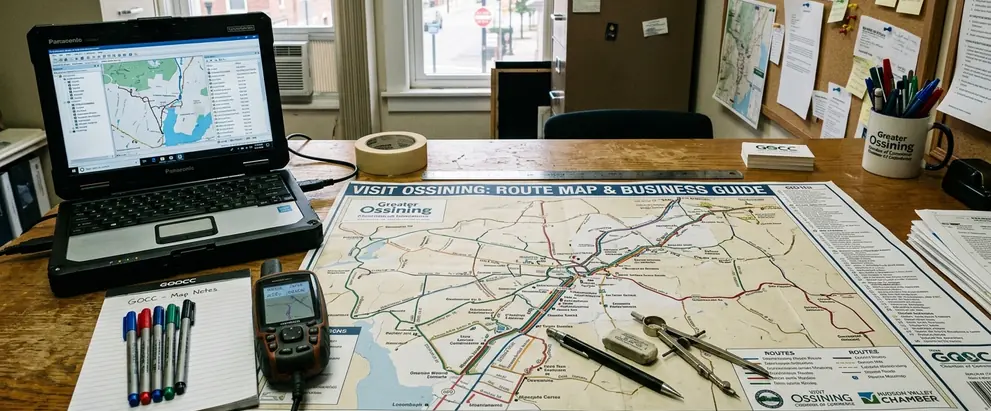
A structured but flexible plan works well. During program reviews, roughly 2.5 to 3.5 hours were required for a standard loop from the station, up to the commercial blocks, and back at a casual walking pace.
Visitors should begin at the riverfront when weather is favorable. This establishes geographic context before moving into the denser downtown blocks. From the waterfront, the route moves uphill toward Main Street. The progression leads directly to restaurants, cafés, small businesses, services, and casual browsing.
The itinerary remains adaptable. Visitors can pause for food or coffee, then loop back depending on energy levels and timing constraints.
Food, Shops, and Local Business Texture
Downtown Ossining operates as a working local business district rather than a purpose-built tourist corridor. Recognizing this distinction helps visitors set accurate expectations. The commercial landscape features independent restaurants, everyday services, specialty shops, professional offices, and community-facing storefronts—all serving a primary resident base.
Dining guidance is best framed by use case. Options exist for a quick coffee stop, a casual lunch, dinner before an event, a family-friendly meal, or takeout before a waterfront walk.
Local business feedback suggests that peak lunch service in the central commercial blocks generally concentrates between 11:45 AM and 1:15 PM, driven by local municipal and office workers. Planning meals outside this window often means quicker seating.
Arts, Events, and Civic Life

Downtown visits frequently overlap with civic activity. This includes seasonal markets, community gatherings, arts programming, library events, waterfront activity, and local business promotions. Specific dates can change, so readers must verify schedules close to the visit.
Events can alter the visitor experience. They add energy and local character, but they also change parking dynamics, traffic patterns, restaurant demand, and pedestrian flow. For example, in local event planning, vendor load-in for weekend street closures typically requires 60 to 90 minutes of restricted vehicle access before pedestrian hours begin.
Expert Tip: Allow 15 to 20 minutes of buffer time for navigating crosswalks and finding parking before scheduled reservations during major civic events.
Scope, Limits, and Accessibility Notes
This document serves as a visitor orientation guide for downtown Ossining. It is not a comprehensive business directory, accessibility audit, restaurant review, or official parking code. The guidance relies on multiple authority signals, including the Greater Ossining Chamber of Commerce perspective, local business context, municipal verification, and transit-oriented visitor patterns. Each source carries different scopes and limitations.
Accessibility requires conservative planning. The downtown area includes slopes, curbs, crossings, older buildings, weather exposure, and varied storefront access. Infrastructure assessments show that sidewalk cross-slopes and curb ramp configurations vary significantly across blocks developed between the 1920s and 2010s. While this guide outlines general pedestrian flow, individual mobility requirements dictate actual route viability. Visitors with specific mobility needs must confirm routes and entrances in advance.
Before You Go
Preparation supports a smooth experience. Checking official municipal alerts 24 to 48 hours prior to arrival helps prevent unexpected detours.
Visitor Checklist
Main Point: Choose an arrival mode, identify a starting zone, check parking or train timing, confirm business hours, review event notices, and plan for the hills.
Proper packing improves comfort. Visitors need comfortable shoes, weather-appropriate layers, a charged phone battery, reservation details, and flexibility for schedule changes.
Downtown Ossining is best experienced as an active local center. Visitors should leave time to notice storefronts, public spaces, and community activity beyond the planned stops.










Join the Discussion