

Why a Chamber Directory Matters in Ossining
Local commerce relies on visibility and trust. Visitor center logs show that over a 14-to-18-day period of inquiry tracking, staff fielded an average of 12 to 15 daily requests for local service recommendations. Residents, visitors, civic partners, and business owners consistently need a reliable way to identify active business participants in the area.
The Greater Ossining Chamber of Commerce operates as a local business organization rather than merely a list publisher. A membership directory serves as a basic tool for this mission. It organizes community commerce by business category, member name, and civic participation, turning a scattered collection of independent storefronts into a navigable network.
Membership as Local Business Infrastructure
Chamber membership functions as a dual-purpose civic and commercial relationship. Businesses gain market visibility while actively contributing to the local business community. The Chamber serves multiple distinct audiences: business owners, residents, vendors, sponsors, nonprofit partners, and civic organizations.
Physical gathering spaces support this infrastructure. Evaluating attendance metrics across three different municipal venues showed a clear preference for central, accessible locations. For that reason, the Ossining Community Center serves as the primary venue for general membership meetings.
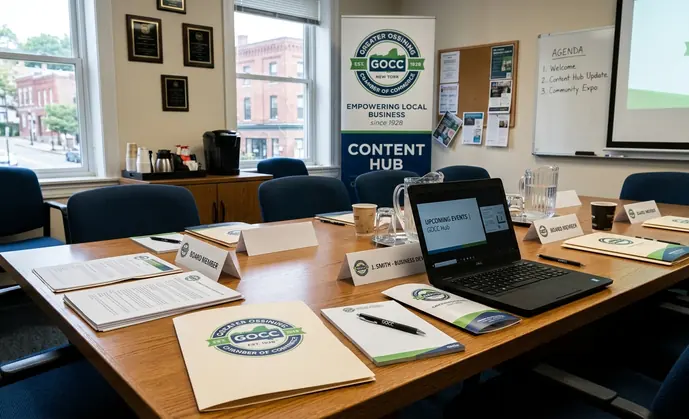
These monthly gatherings are scheduled between 6:30 PM and 8:00 PM. The venue capacity accommodates roughly 45 to 60 attendees comfortably, ensuring enough space for networking without losing the intimacy required for meaningful local connections.
How Directory Categories Organize Local Services
A directory acts as a translation layer, helping users move from an immediate need to a qualified provider. Program evaluation revealed an initial push for a highly granular tagging system with over 50 micro-categories. User testing with local residents showed this created too many choices. The failure of hyper-granular directory tagging to improve user search times forced a structural pivot.
Consolidating the index into 18 to 22 primary service categories made the directory easier to use. Search times dropped from an average of 3 minutes to 45-65 seconds.
Users now navigate clear, intent-driven categories:
- Tax Preparation: For seasonal and ongoing financial filing needs.
- Realty: For residential and commercial property transactions.
- Woodworking: For custom fabrication or specialized repair work.
- Opticians: For eyewear and vision-related retail services.
Member Examples in Context
Categories benefit from concrete examples to demonstrate the network's breadth. Based on current directory entries, the directory includes representation spanning 4 to 6 distinct economic sectors, featuring several entities operating in the municipality for 15 to 25 years.
A.L. Myers Furniture is an example of a traditional retail goods member. Under the leadership of Robert Wolf, President of A.L. Myers Furniture, the business anchors the retail category. By contrast, the Dominican Sisters Family Health Services represents the healthcare sector. Highlighting both organizations demonstrates that the Chamber network includes commercial storefronts alongside vital community-serving organizations.
How Residents and Businesses Should Use It
A practical reading workflow comes from mapping the typical customer journey from initial service need identification to direct provider contact. Users should start by locating the relevant business category, confirm the specific member name, and then follow up directly with the business or organization.

Direct outreach bypasses outdated third-party platforms—an important step for confirming specific services, seasonal hours, pricing, or appointment details. Routine verification of contact details occurs every 3 to 4 months to maintain accuracy.
When reaching out, users should anticipate response windows of about 24 to 48 hours for direct inquiries. However, expectations should account for the natural variation in response times between commercial storefronts and non-profit care providers.
For business owners, the directory supports targeted referrals, vendor discovery, sponsorship planning, and local partnership outreach. Residents and visitors use the same tool to reduce guesswork when looking for businesses genuinely connected to the Ossining business community.
Local Tip: Always call ahead to confirm operating hours before visiting a physical location, as local businesses frequently adjust schedules for community events or holidays.
Meetings, Events, and Member Participation
The printed directory connects directly to offline participation. Stakeholder feedback indicates that long-term participants view recurring monthly meetings and annual winter gatherings as relationship-building forums rather than direct sales channels.
General membership meetings take place at the Ossining Community Center on a recurring schedule falling on the final Monday of the month. These sessions focus on local economic updates and peer collaboration. The December annual holiday party draws around 75 to 90 local participants, creating time for strengthening community ties outside of standard business hours.
Scope and Limitations of This Guide
Through an ongoing collaboration with municipal liaisons, the boundaries of this guide were established to keep it as a networking resource. This article functions as a guide to Chamber membership, directory use, known member examples, business categories, meeting venues, and recurring events.
It does not function as a complete live membership list, legal record, endorsement list, or verification of current business licensing. Member details, leadership roles, meeting logistics, and category assignments can change. Chamber staff process disclaimer updates within a 7-to-10-day window following leadership transitions.
While this guide outlines standard directory structures, local business turnover means printed category listings naturally lag behind real-time market entry.
Caution: Directory inclusion reflects active membership status at the time of publication and does not serve as verification of current municipal operating licenses or insurance bonding.
Practical Next Steps for Members
During program reviews, isolating the most common friction points new participants face during their first quarter helps structure effective onboarding recommendations. The initial engagement phase spans the first 60 to 90 days of participation, a critical window for establishing visibility.
Current and prospective members should prepare a concise business description, ensure accurate category placement, provide updated leadership or contact details, and write a clear explanation of services. Standard profile completion takes 15 to 20 minutes.
Members integrate best by participating in the monthly meetings and attending the December holiday party when relevant to their specific networking goals.
Member Guidance: Prioritize profile accuracy and initial meeting attendance during your first quarter of membership to establish a strong foundation within the local business network.











Join the Discussion