

Why the Village Fair Needs a Context-First Guide
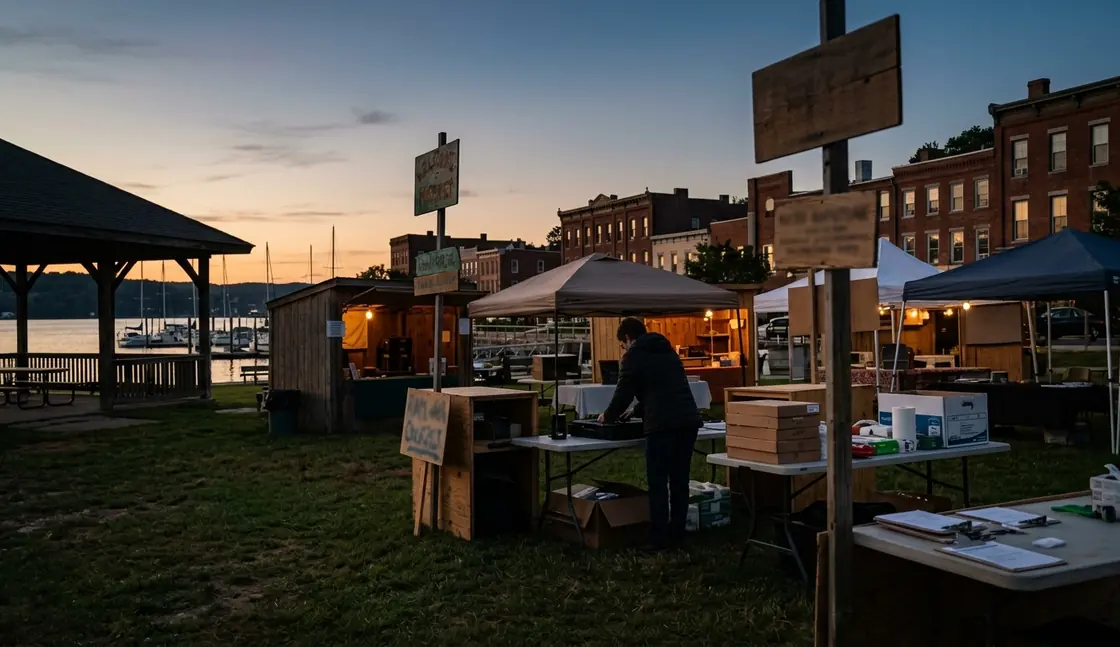
The Ossining Village Fair is not a generic street event dropped into a calendar. It is a recurring civic and business gathering organized in the context of the Greater Ossining Chamber of Commerce, and people arrive at its pages with different jobs to do.
A family may want the date, the likely walking time, and whether the day can hold a relaxed visit with children. A vendor wants booth category, setup rules, and who to contact before load-in. A sponsor looks for recognition, placement, and whether the annual edition still has room in its printed or digital materials. A civic group may care less about selling and more about visibility.
I read a fair page first by asking a plain question: what decision is this page supposed to help someone make?
That approach matters because the available record is historical, not continuous. The source material includes references to both the 37th Annual Ossining Village Fair and the 41st Annual Ossining Village Fair. Those labels show continuity, but they do not give a complete floor plan for every year in between.
Available attendance logs suggest peak foot traffic occurs between about 11:30 AM and 2:15 PM, which requires staggered volunteer shifts. That single operational fact changes how I think about the event. A booth that looks quiet at opening can become hard to staff at midday. A visitor who expects to cover every table quickly may need more patience during the center of the day.
Main Point: The fair works best as a shared civic marketplace, so planning should begin with purpose: browse, participate, sponsor, volunteer, or connect.
Event Record, Dates, and Public References
June 10 appears in the documented event record. More specifically, June 10, 2017 is tied to the 41st Annual Ossining Village Fair context.
That date should not be read in isolation. The Westchester Family backlink signal places the 41st Annual Ossining Village Fair within a June 9-11 weekend cycle, which tells us the event was promoted publicly beyond a single Chamber page. Public promotion matters because residents often encounter the fair through family calendars, community listings, and shared weekend guides rather than through the original organizer page.
How the annual labels should be read
The annual label gives the reader an anchor, not a full archive. A reference to the 41st Annual Ossining Village Fair supports the existence of that annual edition and its public promotion. It does not, by itself, identify every vendor, sponsor, booth location, or activity that appeared on the street that year.
The Green Ossining Committee citation adds another useful piece. It shows that community groups linked to the Chamber’s 37th Annual Ossining Village Fair page when promoting booth participation. In practice, that kind of backlink is often how civic participation becomes visible: a committee, nonprofit, or local group sends its own audience back to the event organizer for booth details.
Archived promotional cycles typically span roughly 45 to 60 days before the second weekend of June. That gives vendors and sponsors a working calendar for attention, but not a substitute for current confirmation.
Caution: Do not assume that an archived annual label confirms the current-year date, booth map, or participant list.
Organizer and Sponsor Network
The Greater Ossining Chamber of Commerce appears as the event organizer in the fair-page context. That role is practical before it is ceremonial. Someone has to collect vendor information, structure sponsor recognition, coordinate public-facing materials, and keep the event legible for people who will only read one page before deciding whether to attend.
The sponsor record also needs careful handling. TD Bank appears in the supplied fair facts as both an event sponsor and a Gold Sponsor. Verizon also appears as a Gold Sponsor. Open Door Family Medical appears in the sponsor network as an event sponsor, which places community health visibility within the public setting of the fair without requiring us to claim any specific service activity on the day.
Why tiers exist
When the organizing committee structured sponsorship tiers, it evaluated a flat-fee model and adopted a tiered approach to accommodate varying marketing budgets among local retail and healthcare participants. That is the kind of decision that sounds small until banners, maps, and booth acknowledgments have to be produced on schedule.
Sponsorship commitments are generally finalized close to 90 to 120 days before the gathering to ensure inclusion in printed banners and digital maps. For a sponsor, that means late interest may still be welcome, but visibility options can narrow once production begins.
For the public, sponsor names should be read as time-bound references. They show how local businesses and institutions have appeared in fair materials. They should not be treated as a current sponsor roll unless the current Chamber page says so.
Vendor and Civic Participation Patterns
The fair operates as both a marketplace and a civic gathering. That distinction matters. A marketplace measures readiness by inventory, payment, display, and transaction flow. A civic gathering measures readiness by conversation, trust, and whether a resident can understand why a group is present within thirty seconds of stopping at the table.
The documented participant categories include merchandise, craft, food, nonprofit, retail, education, and healthcare. The record also ties 2011 to merchandise and craft vendors. It ties 2010 to food and nonprofit vendors, as well as broader Ossining Village Fair vendor participation.
Booth size shapes the day
During program reviews, standard booth allocations measure 10 by 10 feet. Food service participants require an additional 5-foot buffer for health department compliance.
That physical rule has a social effect. A craft vendor can often build a clear display inside a compact square. Food participants must think about line formation, safety, service motion, and separation. A nonprofit table may need space for printed material, but its real work is eye contact and a concise invitation.
The strongest vendor preparation starts with category, not decoration. A retail booth asks: what can someone understand without touching the product? A civic booth asks: what action should a resident take after the conversation? A healthcare or education presence asks: what information is useful in a public environment where privacy and time are limited?
Expert Tip: Build the booth around one primary action, then let signs, handouts, and staffing support that action.
How Visitors Should Plan the Day
Visitors should plan the fair in sequence. First, confirm the current date. Second, review the Chamber event page when available. Third, identify priority booths or sponsor areas. Fourth, leave time for community organizations, because those tables often produce the conversations people remember after the purchases are packed away.
Families and residents do not use the fair the same way business owners or civic partners do. A family may browse, eat, pause, and drift toward familiar faces. Visitor planning notes suggest families often spend 90 to 150 minutes navigating the exhibits. The same planning notes put a targeted networking visit at 45 to 60 minutes.
Browsing versus targeted networking
Casual browsing rewards openness. Walk the street once without trying to solve anything. Notice the food, the local groups, the educational tables, and the retail anchors. Then decide where to return.
Targeted networking requires a narrower plan. Make a short list before arriving: two vendors to meet, one sponsor area to observe, one civic organization to understand. Keep the first conversation brief unless both sides clearly have time.
Planners map high-density zones by placing major healthcare and retail anchors at opposite ends of the main thoroughfare, drawing attendees through smaller craft and community areas. That design principle helps explain why the fair can feel busy even when a visitor is only walking from one destination to another.
Plan around vendor categories rather than fixed booth assumptions. The documented facts describe historical participation; they do not supply a complete current layout. Foot traffic density and dwell times fluctuate significantly based on whether the attendee is a local resident browsing or a regional business owner engaged in targeted networking.
Vendor and Sponsor Readiness Checklist
A good checklist prevents day-of improvisation from becoming day-of confusion. For vendors, the first discipline is to confirm the basic fit before thinking about tablecloths, banners, or product placement.
Vendor readiness
- Confirm eligibility for the current annual edition.
- Confirm booth category: merchandise, craft, food, nonprofit, retail, education, healthcare, or another approved category.
- Review setup requirements, including booth size and any spacing rule that applies to the category.
- Confirm insurance or permit needs if applicable, especially for food service.
- Prepare display materials that can be understood quickly by a passing visitor.
- Verify payment status before the event window closes.
- Save day-of contact details somewhere accessible without searching through email.
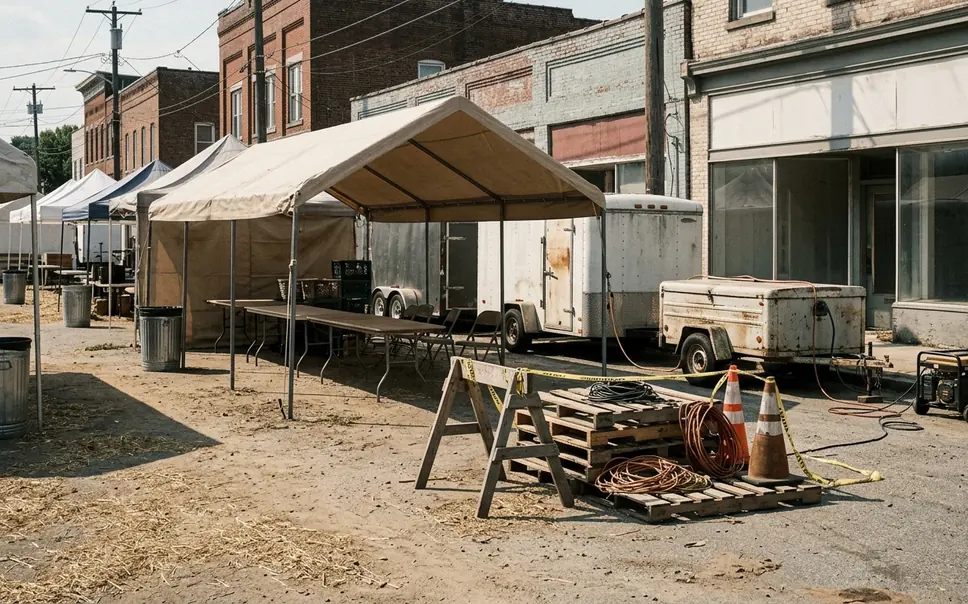
Load-in schedules require all vehicles to clear the pedestrian zones between 7:00 AM and 8:15 AM, strictly enforced by local traffic enforcement. That fact deserves respect. A vendor who arrives late can affect not only their own setup, but also traffic safety and neighboring booths.
Sponsor readiness
- Confirm recognition level and the exact annual edition it applies to.
- Submit logo or name usage in the requested format.
- Clarify whether sponsorship includes a booth presence or only public recognition.
- Prepare community messaging that fits a civic setting, not only a sales setting.
- Ask whether recognition is tied to printed banners, digital maps, event listings, or a combination of materials.
The historical sponsor examples help illustrate the range. TD Bank, Verizon, and Open Door Family Medical appear in fair materials in different sponsor contexts. That record shows how businesses and institutions have participated, but it does not establish current participation without a current-year source.
Scope, Limitations, and Archive Cautions
This guide relies on the supplied historical fair facts and backlink labels. It is not a complete archive of every Ossining Village Fair year, and the archive is useful, but it is not a live floor plan.
Sponsor names, vendor examples, annual labels, and participation categories are time-bound. Readers should verify current-year participation before making travel plans, vendor payments, sponsorship commitments, or staffing decisions. Historical vendor lists and sponsorship tiers reflect past participation and do not guarantee presence at the upcoming iteration of the gathering.
About legacy page labels
The page label “Untitled Document” should be treated as a likely artifact of legacy page metadata or archived page labeling. It is not a meaningful event title. Legacy page labels often persist in public search results for around 18 to 24 months after a specific annual edition concludes, so old labels can remain visible after the fair page has stopped serving an active planning purpose.
Assuming legacy metadata from previous promotional cycles accurately reflects current-year booth assignments creates unnecessary risk. The safer practice is simple: use the historical record to understand the fair’s civic shape, then use the current Chamber communication to make current decisions.
Citations
- Chamber fair-page references identifying the Greater Ossining Chamber of Commerce in the event organizer context.
- Westchester Family backlink label referencing the 41st Annual Ossining Village Fair during the June 9-11 weekend cycle.
- Green Ossining Committee citation linking to the Chamber’s 37th Annual Ossining Village Fair page for booth participation context.
- Historical fair materials noting sponsor appearances, vendor categories, operational timing, and archive behavior.





Join the Discussion