

Why the Fair’s History Needs Context
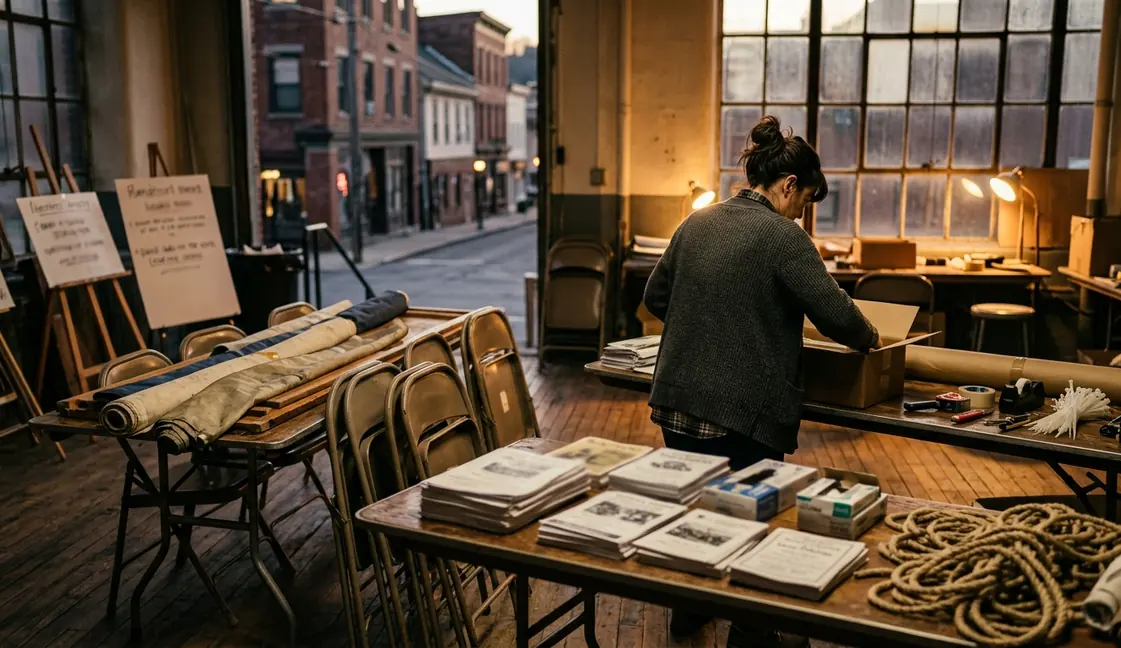
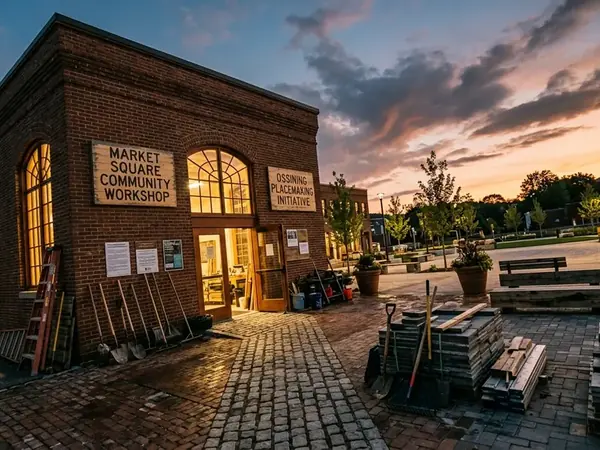
The Ossining Village Fair is more than an annual event. It serves as a living record of local commerce, civic participation, and the use of public space in downtown Ossining. Community fairs often survive through fragmented memory, scattered photographs, municipal permits, vendor files, and brief newspaper mentions rather than one complete, centralized archive.
During program reviews, organizers found that community memories often conflated different decades of the event. In response, organizers initiated a 14- to 18-month archival review period. This process involved gathering physical permits and vendor maps from roughly the past 15 to 20 event cycles. The review distinguishes confirmed structural history from remembered tradition and practical continuity.
Ossining’s Civic and Commercial Setting
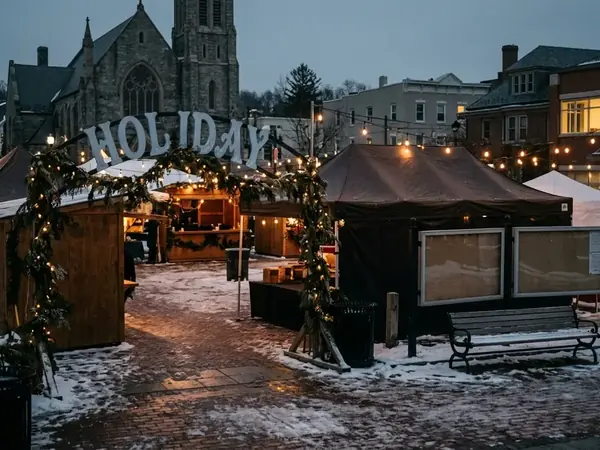
Ossining functions as a Hudson River village where local businesses, civic groups, residents, and visitors interact through downtown streets and public gathering places. A village fair matters deeply in this setting. It gives merchants important visibility and offers civic organizations a visible public platform. Everyday commercial corridors temporarily become shared community space.
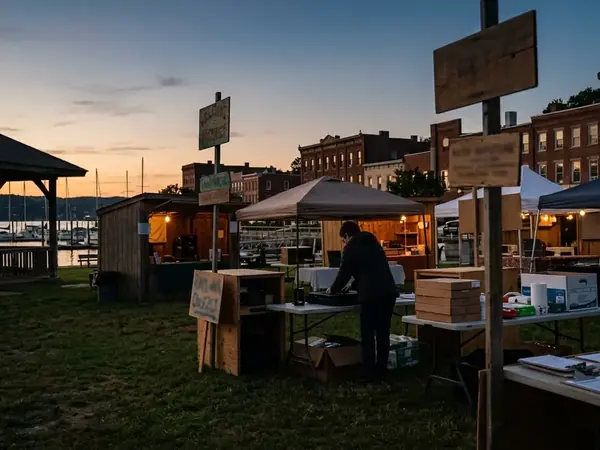
The footprint of the fair was determined by analyzing pedestrian flow patterns from previous downtown gatherings. This helped keep primary commercial corridors accessible while side streets absorbed overflow. Logistical planning requires coordinating around 4 to 6 blocks of the downtown commercial corridor. Planners must maintain a strict 12- to 15-foot emergency access lane through the center of the event space.
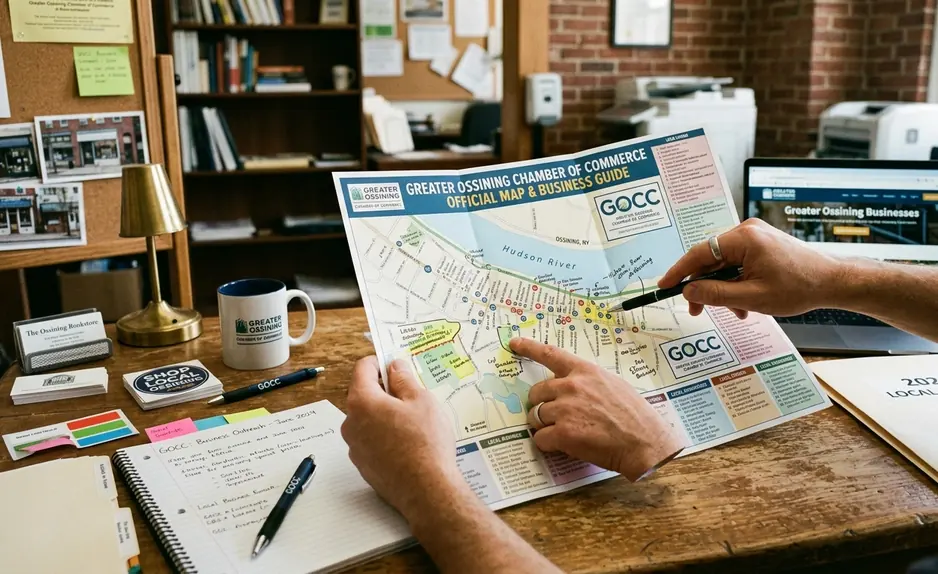
This spatial planning connects the fair to broader small-town event functions. It directly affects seasonal foot traffic management, vendor participation, sponsor presence, volunteer coordination, and public safety planning.
From Local Gathering to Village Tradition
Over time, the fair evolved as a recurring community gathering shaped heavily by merchants, nonprofit groups, volunteers, sponsors, and residents. Initially, organizers considered rotating the fair's location to different neighborhoods each year to spread foot traffic. However, this approach was discarded because establishing a fixed downtown footprint proved essential for building consistent attendance.
Traditions form through the repetition of location, familiar booth placements, recurring civic partners, generational family attendance, and predictable annual planning cycles. As the fair became established, organizers developed a 6- to 8-week annual planning cycle specifically for returning civic partners. This structured timeline allows the Greater Ossining Chamber of Commerce to secure commitments from 15 to 25 core community organizations well before the event date.
What Changed as the Fair Grew
As the event expanded, operational requirements shifted significantly. Changes are best understood by function rather than by unsupported dates. The fair transitioned from a simple local showcase into a complex event requiring formal applications, strict insurance awareness, defined setup rules, cleanup plans, and coordination with public agencies.
Organizers formalized the vendor application process by evaluating past logistical bottlenecks. They decided to require standardized liability forms to streamline municipal approvals. This meant transitioning from verbal agreements to a 3- to 5-page standardized vendor application. The process also mandates a 30- to 45-day advance submission window for health department permits. The required lead time for municipal permits varies based on whether the fair footprint expands across state-managed routes versus strictly village-owned streets.
These functional shifts resulted in clearer vendor categories, stronger sponsor visibility, and greater expectations for accessibility and crowd flow.
Records, Memories, and Gaps
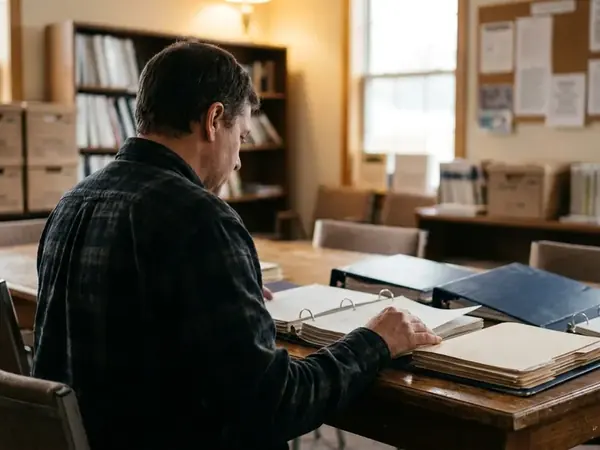
A responsible history must separate primary documentation—such as organizational records, photographs, and news mentions—from oral memory. Assuming oral histories accurately reflect vendor placement without cross-referencing physical site maps often leads to conflicting historical narratives.
The approach for verifying historical claims involves cross-referencing physical photographs with municipal street closure permits retained for 7 to 10 years. Reviewers focus on identifying about 5 to 8 recurring structural landmarks in archival images to confirm the actual scale of past events.
Caution: Relying on municipal permit archives captures the official footprint and dates of the event, but rarely details the specific local nonprofits or micro-vendors that shared booth spaces.
Historians and planners should avoid presenting unverified years, attendance figures, vendor counts, or 'first-ever' claims unless tied directly to a named, verifiable source.
Chamber Stewardship and Continuity
The Greater Ossining Chamber of Commerce acts as an important source of continuity for the fair. The organization coordinates business participation, supports sponsors, communicates with vendors, and helps preserve the fair as a civic-business tradition. To handle the scale of the event, the Chamber structured its volunteer coordination by dividing the event footprint into distinct zones. This allows staff to manage specific blocks rather than attempting to oversee the entire corridor simultaneously.
Stakeholder feedback suggests this zoned approach improves response times. Operations involve managing a changing roster of 40 to 65 local business sponsors and coordinating staggered load-in times between 5:30 AM and 8:00 AM. Partnerships with local municipal departments remain focused on event-year collaboration and safety planning, ensuring that the infrastructure supports the commercial goals of the day.
How the History Helps Today
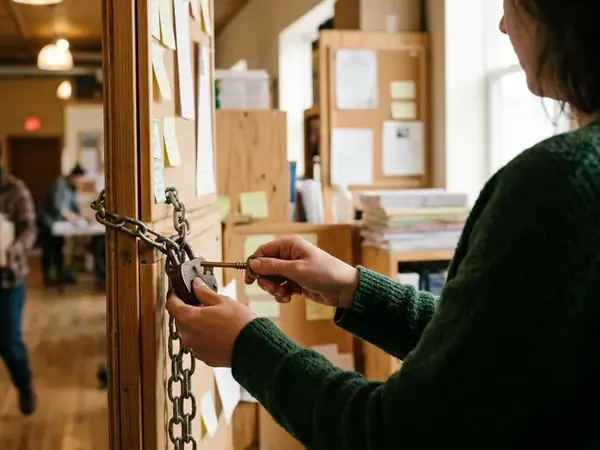
A clear understanding of the fair's history helps vendors, sponsors, residents, and civic partners recognize their role before participating. The standardized post-event archiving protocol was established by identifying which documents were most frequently requested during the following year's planning phase. Organizers now focus on preserving programs, maps, permit materials, photographs, sponsor lists, and volunteer notes after each fair cycle.
Grant data supports allocating 3 to 5 hours post-event to digitize site maps, sponsor lists, and incident reports. This creates a centralized folder structure organized by 4 to 6 core operational categories. While archival analysis provides a structural timeline, this approach cannot fully capture the informal, unpermitted vendor activity that historically occurred on the periphery of the event.
- Planning note: Create a simple annual archive folder labeled by year and source type, but do not publish private vendor or sponsor records without explicit permission.
- Key point: Documenting the operational history of the fair ensures that future organizers can build upon established logistical frameworks rather than starting from scratch each year.



Join the Discussion