

Why Community Life Depends on Local Commerce
Ossining's community life is shaped not only by municipal services and nonprofit activity, but also by the commercial entities that keep public spaces active. Storefronts, service firms, vendors, sponsors, and employers form the foundation of neighborhood vitality. This impact report details how local business participation translates into visible civic outcomes, resource use, and practical community benefits.
To understand this impact, we must look at the ground-level reality of commercial engagement. Program evaluation revealed that establishing a reliable picture of community health requires reporting cycles spanning 12 to 18 months for civic impact assessments. These assessments are grounded in demographic baseline reviews utilizing the most recent 3- to 5-year U.S. Census Bureau QuickFacts for Ossining village, New York estimates. Anchoring observations in verified demographic context helps evaluate how commercial activity supports the broader population.
The Ossining Civic Network
The local civic network operates through a set of interconnected roles. Businesses provide physical gathering places, financial sponsorship support, active vendor participation, and employer stability. Professional services offer neighborhood-level visibility that municipal programs alone cannot achieve. Within this network, the Greater Ossining Chamber of Commerce functions as a nonprofit connector, bridging the gap between business owners, residents, civic partners, and community organizations.
Maintaining these connections requires proven administrative discipline. Monitoring reports show that successful event coordination relies on vendor application processing windows spanning 14 to 21 days prior to community gatherings. Furthermore, maintaining accurate financial records necessitates sponsorship commitment tracking updated in 7- to 10-day intervals during peak planning seasons. Chamber-supported activity should be distinguished from the broader municipal, school, and faith-based work occurring simultaneously; the Chamber's role is to facilitate commercial participation within this larger network, not to claim total community impact.
Outcome Area: Daily Neighborhood Vitality
Local businesses strengthen everyday civic life through active storefronts and consistent resident services. Restaurants that host informal gatherings and retailers that activate sidewalks create a reliable rhythm of face-to-face contact. This daily interaction builds a foundation of trust and familiarity that formal civic programs often struggle to replicate.
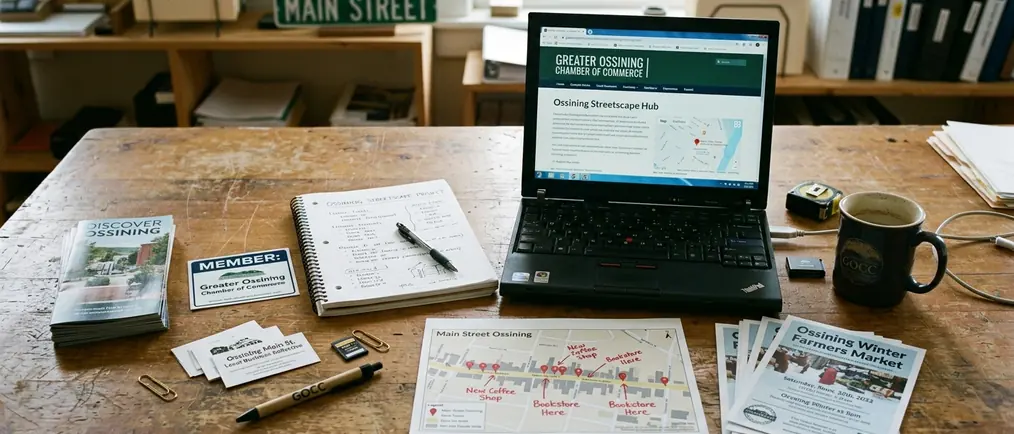
Stakeholder feedback indicates that this vitality is most visible during specific operational windows. For example, commercial corridors benefit from extended street presence during the roughly 4:30 PM to 7:00 PM commuter window, providing a safe and active environment for returning residents. Additionally, professional firms and personal-service businesses frequently generate informal resident referrals occurring within 2 to 4 blocks of primary commercial corridors, strengthening localized economic networks.
Caution: Attempting to quantify qualitative neighborhood vitality without baseline foot-traffic metrics leads to unsupported economic claims that undermine the report's credibility.
Outcome Area: Events, Sponsors, and Volunteers
Chamber-connected events convert individual business participation into shared public benefit. These gatherings provide vendor opportunities, facilitate cross-promotion, and create shared civic visibility. The focus remains on tangible outcomes: public gathering spaces, local spending opportunities, direct business-to-resident contact, and stronger relationships among civic partners.
Documenting these outcomes requires time-bound administrative records. Event rosters and post-event summaries confirm that volunteer staffing shifts scheduled in about 3- to 4-hour blocks provide the necessary coverage for safe public operations. Similarly, successful public gatherings depend on permit coordination notes filed 45 to 60 days ahead of the scheduled date. The ratio of volunteer hours to financial sponsorship shifts significantly depending on whether the civic initiative is a single-day gathering or a season-long neighborhood activation.
Resource Allocation Summary
Transparent resource management is a fundamental requirement of any civic impact report. Resources are organized by their primary purpose: event operations, member communications, business education, civic partnerships, outreach materials, administrative capacity, and contingency planning.
When structuring the resource allocation summary, the initial approach was to publish line-item financial totals. However, after reviewing the variance in in-kind donations versus cash sponsorships, we shifted to summarizing allocation categories rather than financial totals. This adjustment provided a more accurate reflection of how community support actually functions. Current operational standards maintain contingency planning reserves covering 3 to 6 months of administrative capacity. Additionally, public awareness campaigns account for outreach material distribution cycles requiring 10 to 14 days of lead time.
How Participation Becomes Community Impact
Moving from analysis to implementation requires a structured sequence of actions. The process often begins with identifying a specific civic need and recruiting relevant business participation. Clear communication and coordinated partner support ensure that event delivery meets community expectations.

Grant reporting supports the effectiveness of this structured approach. During the initial recruitment phase, partner coordination calls typically lasting 15 to 25 minutes establish clear expectations and responsibilities. Following the event, accountability is maintained through post-program outcome documentation completed within 7 to 14 days of delivery. This rapid documentation cycle allows for immediate review and continuous improvement of future initiatives.
Expert Tip: Choose one sustainable role—hosting, sponsoring, volunteering, cross-promoting, mentoring, or offering in-kind services, rather than overcommitting across multiple areas.
Scope, Limits, and Reporting Discipline
Because this report relies on multiple credibility signals, including nonprofit status and ongoing civic partnerships since around 2018, it is necessary to define its analytical boundaries. The data presented describes Chamber-connected participation and documented outcomes. Reporting coverage periods tied to the previous 12 to 14 months of verified internal records ensure that all observations remain current and relevant.
While this framework captures structured Chamber engagement, it inherently undercounts informal, undocumented neighborhood support networks. This reporting framework accurately reflects member-connected participation but cannot measure the total economic activity or independent civic benefits generated by unaffiliated businesses across the village. Qualitative outcomes discussed in this report should be understood as descriptive indicators of community health, not as absolute numeric claims.
Next Steps for Members and Neighbors
Strengthening Ossining's economic life requires ongoing participation from business owners, residents, and community partners. Whether you choose to join the Chamber, sponsor a community activity, attend local events, or share verified business updates, your involvement directly supports the civic network.
For those ready to participate, administrative processes are designed to respect your time. Current procedures include onboarding sequences for new sponsors requiring 3 to 5 business days for material review. For hands-on participation, we conduct volunteer orientation sessions lasting 45 to 60 minutes before participants begin their roles.
Main Point: Local businesses strengthen Ossining most when everyday commerce, civic participation, and accountable coordination work together.
We extend our gratitude to the business owners, residents, event vendors, sponsors, and community partners who continue to invest their time and resources into making Ossining a distinctive and vibrant place to live and work.








Join the Discussion