

A Tuesday Morning at Street Level
On a Tuesday morning in mid-October 2021, people moving through Market Square generally stayed for three to five minutes. The pattern suggested passage rather than lingering: arrive from a nearby street, cross the square, glance toward the bordering storefronts, and continue onward.
The physical and commercial setting helped explain that rhythm. Pedestrian sightlines had degraded, seating was inadequate, and three storefronts along the square’s north edge stood vacant. Adjacent businesses had already experienced a sustained period of reduced foot traffic lasting roughly 14 to 18 months.
That observed morning provides a useful starting point because it keeps the case grounded in the square itself. The central question is practical: how could targeted community action and local business investment change Market Square’s civic and commercial function?
Revitalization here does not mean a permanent solution to every downtown economic challenge. It refers to observable changes in pedestrian dwell time and adjacent storefront foot traffic between October 2021 and May 2023, considered alongside business participation, scheduled programming, and routine maintenance.
Quick Nav
- The conditions that pushed Market Square toward action
- How the square was assessed across a full day
- The division of public and merchant responsibilities
- The sequence behind the physical and operational changes
- Results that fit within the documented boundary
- The daily burden created by movable amenities
- A stewardship test for future proposals
The Square’s Boundary
The case concerns Market Square, the properties immediately bordering it, and activity conducted on permitted vendor days. Broader village-wide commercial results sit outside this measurement boundary.
Why Market Square Needed More Than a Facelift
The pressure for intervention developed through several connected conditions. Over a period of approximately 14 to 18 months, local businesses experienced reduced foot traffic. The three vacant storefronts on the north edge weakened the relationship between the public space and its commercial frontage, while degraded sightlines made it harder for pedestrians to read the square as a comfortable destination.
Seating presented another basic obstacle. A person carrying lunch, waiting for someone, or considering a longer visit had too few practical reasons to stop. That deficiency affected more than comfort. Short visits gave nearby storefronts less opportunity to benefit from activity in the public space.
Local business owners responded by petitioning the municipal planning board. Their action placed commercial conditions and public-space design within the same discussion, which was important because the documented problems crossed several lines of responsibility.
Connected Operating Problems
- Circulation: The square continued to move pedestrians through the area, yet the observed three-to-five-minute dwell time showed limited staying activity.
- Visibility: Degraded sightlines reduced the visual connection among pedestrians, storefronts, and activity inside the square.
- Comfort: Inadequate seating limited the square’s usefulness for lunch, informal meetings, and waiting.
- Commercial frontage: Three vacancies along the north edge interrupted the active storefront line.
- Event readiness: Vendors needed accessible electrical hookups, while organizers needed a layout that could change without heavy equipment.
These conditions explain why isolated cosmetic work would have reached only one layer of the problem. Market Square required coordinated attention to design, merchant needs, scheduled activity, and upkeep. A more attractive surface could improve appearance, but appearance alone would not provide power for vendors, support changing uses, or assign responsibility for daily operations.
Reading Market Square by the Clock
The assessment treated Market Square as a place that changed over the course of a day. Decision-makers mapped use across three distinct time blocks: morning transit, midday lunch, and evening dining. That approach exposed different demands that a single site visit could easily miss.
Morning Transit
During the morning period, the square functioned primarily as a route. The planning question concerned flow: could commuters and other pedestrians cross efficiently while still seeing the bordering businesses and understanding what the square offered later in the day?
Midday Lunch
At midday, comfort carried more weight. Seating, shade, food access, and the ability to remain in the square affected whether a brief visit became a longer stay. The earlier dwell-time observation made this period especially important because it offered a direct opportunity to turn movement into useful occupation.
Evening Dining
Evening use depended on the relationship between the public space and nearby storefronts. Flexible seating and clear circulation could support dining activity, while cumbersome event infrastructure could compete with regular business operations after the event ended.
The planning committee initially considered a cosmetic upgrade based on fixed concrete planters. Merchant interviews, conducted in about 45-minute sessions, shifted the diagnosis. Those conversations identified a lack of shade and accessible electrical hookups for pop-up vendors as the more immediate barriers to longer stays and flexible programming. The planter concept was then discarded.
This step matters methodologically. Interviews tied design priorities to specific operating needs, while the time-block map tested those needs against actual patterns of use. Together, they directed attention toward four questions:
- Who uses the square during each part of the day?
- What prevents those users from staying longer?
- What do adjacent businesses and pop-up vendors need from the space?
- Who can maintain each new feature after installation?
The available record supports these broad priorities more clearly than every discussion or handoff within the planning process. That distinction matters when assigning credit for a project involving merchants, municipal actors, organizers, and property interests.
Dividing the Work Between Public Investment and Merchants
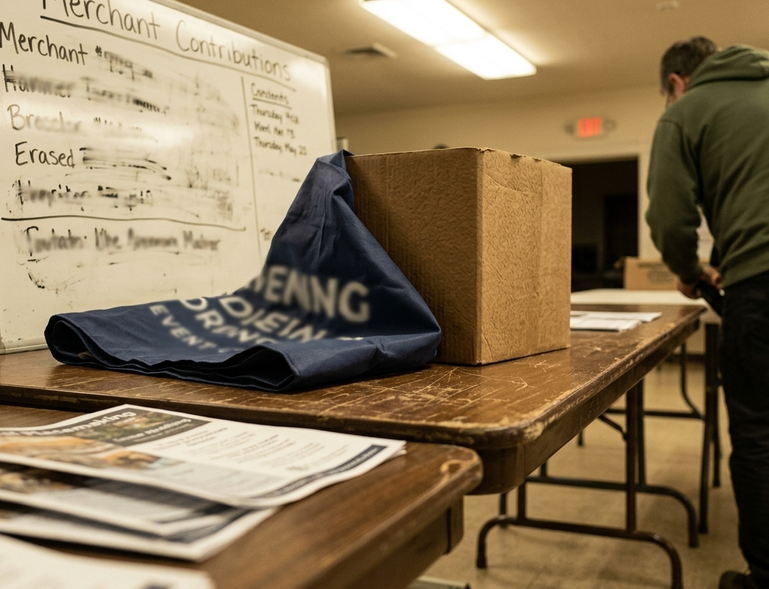
Coordination gave the Market Square effort its working structure. Capital infrastructure costs were assigned to a municipal downtown revitalization grant. Local merchants pooled resources for the first year of seasonal programming and for maintenance of the movable seating.
Six to eight local merchants participated in that funding arrangement. Their role connected the public investment inside the square with the businesses expected to interact with its visitors. Merchant participation also helped programming begin without treating the infrastructure grant as an unlimited operating fund.
Who Carried Which Responsibility
- Local business owners petitioned the municipal planning board after the sustained decline in foot traffic.
- The planning committee assessed use patterns, considered physical options, and incorporated needs raised during merchant interviews.
- The municipal grant covered capital infrastructure costs.
- Participating merchants pooled resources for the first year of seasonal programming and movable seating maintenance.
- Event operations had to accommodate vendors while preserving ordinary morning, midday, and evening uses.
This division reduced confusion between construction and operation. Electrical conduit belonged to the capital side of the project. Seasonal programming, seating care, setup, and cleanup belonged to recurring operations.
The Greater Ossining Chamber of Commerce has a useful civic interest in maintaining that distinction. The documented project record does not place every delivery task with the Chamber, so its clearest future function is as a checkpoint: proposals presented for Chamber or municipal approval should identify the responsible party, operating cost, and maintenance term before commitments are made.
Coordination in Practice
A public improvement can make activity possible. Storefront participation, event scheduling, setup, and maintenance determine whether that possibility becomes a dependable routine.
The Sequence That Made the Square Flexible
The implementation worked as a sequence. Enabling infrastructure came first, visible and movable elements followed, programming supplied reasons to use the space, and daily operations kept those elements available.
1. Install Power Below the Activity
Flush-grade electrical access points received priority because pop-up vendors needed accessible power without loose temporary connections dominating pedestrian routes. Electrical conduit installation took approximately 45 to 60 days.
Placing the access points flush with the surrounding grade also protected the square’s ability to serve ordinary circulation. When no market was underway, the infrastructure remained available without requiring a permanent event footprint.
2. Choose Modular Seating
Modular seating addressed the shortage identified in the original conditions while preserving the ability to rearrange the square. People could use the seating during lunch or evening activity, and organizers could reposition it for vendor days.
The choice also created a maintenance obligation. Movable pieces require unlocking, placement, inspection, and securing. That operational consequence became clearer after implementation and deserves equal weight with the seating’s immediate usefulness.
3. Preserve Space for Changing Uses
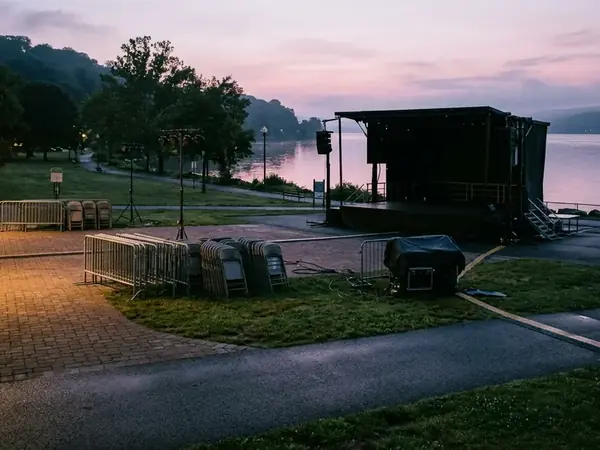
A permanent stage would have assigned a large portion of Market Square to one event format. The selected approach favored flexible gathering space and vendor infrastructure instead. This allowed the square to move from a morning commuter route to a weekend market without heavy equipment.
Weekend market setup took roughly two to three hours. That transition time supplied organizers with a realistic operating window and gave nearby merchants a clearer sense of when access and activity would change.
4. Pair Infrastructure With Programming
The first year of seasonal programming gave the physical changes a purpose visible to the public. Vendors could use the new electrical access, seating could respond to the event layout, and bordering businesses could participate in a busier square.
The order was important. Programming followed the enabling work, so organizers could plan around confirmed capacity rather than improvised power and fixed obstacles. Merchant funding then supported the recurring activity and seating care that the capital grant did not cover.
What Changed and What the Record Supports
The strongest evidence stays within a narrow geographic and operational boundary. The impact analysis covered properties immediately bordering Market Square and permitted vendor days. It explicitly excluded broader village-wide commercial data, preventing unrelated downtown activity from enlarging the apparent result.
Vendor Participation
Across a nine-month tracking period from June 2022 through February 2023, vendor participation increased from four to six vendors per weekend to 11 to 14 per weekend. The unit was participating vendors on Market Square’s permitted weekend activity, rather than all vendors operating elsewhere in Ossining.
This measure speaks directly to the project’s event function. Flush-grade electrical access and a reconfigurable layout supported more vendors within the same defined place. It does not establish a village-wide business trend or explain the individual sales performance of participating vendors.
Permitted Vendor Days
The Market Square Metric Snapshot records 12 permitted vendor days during the baseline period from October 2021 through March 2022. The comparison period, October 2022 through March 2023, recorded 34 days, an increase of 22. The snapshot identifies the source as the municipal permit record, with each authorized vendor day serving as the count unit.
The matching six-month calendar windows improve comparability. The measure still describes scheduled and permitted use, so it should remain separate from pedestrian counts, sales receipts, or storefront occupancy.
Dwell Time and Storefront Foot Traffic
The Tuesday morning observation from mid-October 2021 provides a baseline dwell time of three to five minutes. Revitalization was defined around increased dwell time and adjacent storefront foot traffic through May 2023, but the supplied record does not provide a comparable follow-up dwell-time figure or a numerical storefront count collected with the same method.
That gap limits the claim. The case can document greater vendor participation and more permitted vendor days. It can also describe the project’s intent to encourage longer stays and storefront contact. A precise before-and-after statement about dwell time would require a follow-up observation using the same time block, location, and counting procedure.
Evidence Worth Keeping Separate
- Vendor participation measures how many vendors joined permitted weekend activity.
- Permitted vendor days measure authorized programming frequency.
- Dwell time measures how long observed pedestrians remain in the square.
- Adjacent storefront foot traffic requires its own consistent count at the properties bordering the square.
Keeping these measures separate gives business owners and civic participants a clearer view of what the project achieved and what still requires observation.
The Daily Burden Behind Movable Seating
The physical improvements introduced a recurring vulnerability. Someone had to unlock and secure the modular seating every day, and that routine took approximately 15 to 20 minutes. In practice, the responsibility fell unevenly on two adjacent business owners rather than a centralized maintenance staff.
Fifteen minutes can appear minor in a project plan. At street level, it arrives during opening tasks, deliveries, staffing changes, weather decisions, and customer service. The same person may also handle cleanup or respond when furniture has been moved outside the expected layout.
Where Transferability Breaks Down
The Market Square approach relies on engaged merchants operating across overlapping daytime and evening hours. Another commercial district may have movable furniture and vendor power, yet lack businesses able to manage daily access. In that setting, the operating model would weaken even if the physical design were copied exactly.
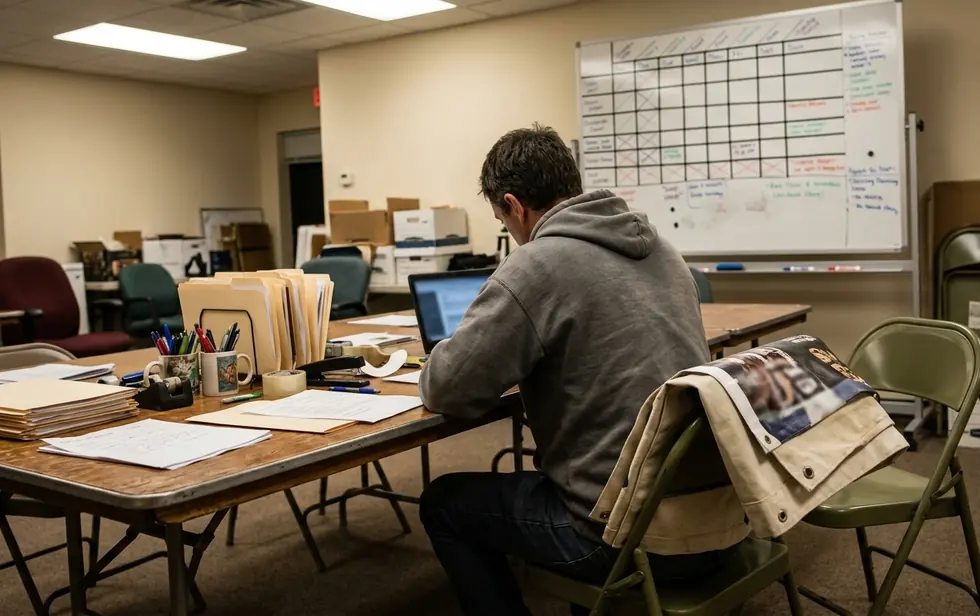
Programming carries a similar dependency. Electrical access points remain durable capital assets. Vendor activity requires repeated scheduling, permits, setup, merchant participation, and cleanup. The distinction separates lasting infrastructure from recurring civic work.
The Seating Check
Before adding a movable amenity, write down who unlocks it, who checks it during the day, who secures it, and who covers the task when the usual person is unavailable.
The uneven burden on two business owners also raises a fairness question. Businesses bordering a public square may receive foot-traffic benefits, but that proximity should not quietly turn them into an unpaid maintenance department. A sound stewardship plan should assign the work openly and fund it for the full operating period.
Fund Stewardship Before the Next Addition
Market Square’s experience follows a linked process: observe the place at street level, diagnose use across the day, connect design decisions to merchant and visitor needs, divide capital work from recurring operations, and measure activity within a fixed boundary.
Future proposals can use a three-step test before resources are committed.
- Define the use: Name the user need and the measurable outcome. “More activity” is too broad; a proposal should specify whether it seeks longer stays, additional permitted vendor days, or another observable result.
- Assign ownership: Identify the accountable party and the business role. The plan should state who approves, delivers, opens, closes, cleans, and responds when normal operations change.
- Fund the routine: Attach a 24-month maintenance and operations plan covering labor, scheduling, replacement, storage, and daily responsibility.
This test would give the Greater Ossining Chamber of Commerce, municipal decision-makers, merchants, and civic participants a common basis for reviewing proposals. It also protects public enthusiasm from outrunning operational capacity.
Ossining should require a documented and pre-funded 24-month stewardship plan before approving another stand-alone amenity or event for Market Square.












Join the Discussion