

A Booth Can Become a Local Service
The most productive Village Fair sponsorships begin as measurable acts of neighborhood service. A regional hardware store recently used this approach at the Ossining Village Fair. Event organizers expected foot traffic ranging from 3,500 to 4,200 attendees over a six-hour period. Historically, passive banner placements generated community goodwill while failing to generate measurable retail foot traffic beyond general brand awareness. To change this dynamic, the store expanded its standard 10x10 foot vendor footprint to 10x20 feet. This extra space accommodated hands-on demonstrations.
The strategy followed a practical sequence. The team identified a community need, created an interactive booth response, recorded attributable engagement, and continued the relationship after the fair. By treating the vendor space as an extension of their service counter, the business turned a standard civic sponsorship into a measurable customer acquisition channel.
The Challenge: Visibility Without Attribution
A crowded civic event creates substantial exposure while revealing little about who engaged, who later visited the store, or who returned. Passive sponsorship assets such as signage or branded giveaways are difficult to connect to subsequent customer behavior. The planning committee initially considered distributing branded flyers with discount QR codes to track engagement. They discarded this approach after reviewing data from a late 2022 street festival. That review showed average dwell times at passive informational booths ranging from 15 to 45 seconds.
The hardware store faced a strategic challenge. They needed to convert brief fair attendance into a relevant, voluntary interaction consistent with their practical retail expertise. The team set a target dwell time for interactive engagement between 3 and 5 minutes per visitor. Achieving this required a redesign of the traditional festival booth experience.
What Community ROI Needed to Measure
The store's management established a three-tier measurement hierarchy to isolate commercial success from general event attendance. This model tracked verified booth interactions, attributed store visits, and repeat behavior. Booth outputs consisted of verified actions, specifically participation in the interactive activity and voluntary contact capture using the business's documented systems.
Attributed foot traffic required a documented mechanism connecting the store visit directly to the fair. The team defined the initial store visit attribution window as 3 to 14 days post-event. They set the repeat behavior tracking period at 45 to 60 days following the initial attributed visit. This structure ensured the business measured actual campaign impact.
The Solution: Design for Participation
The store shifted the sponsorship from passive brand exposure toward an interactive booth connected to the practical reasons residents use a hardware retailer. The booth centered on a practical DIY repair demonstration. Staff showcased their retail expertise while guiding visitors through a hands-on action. Visitors then provided contact information through a voluntary digital sign-in tablet.
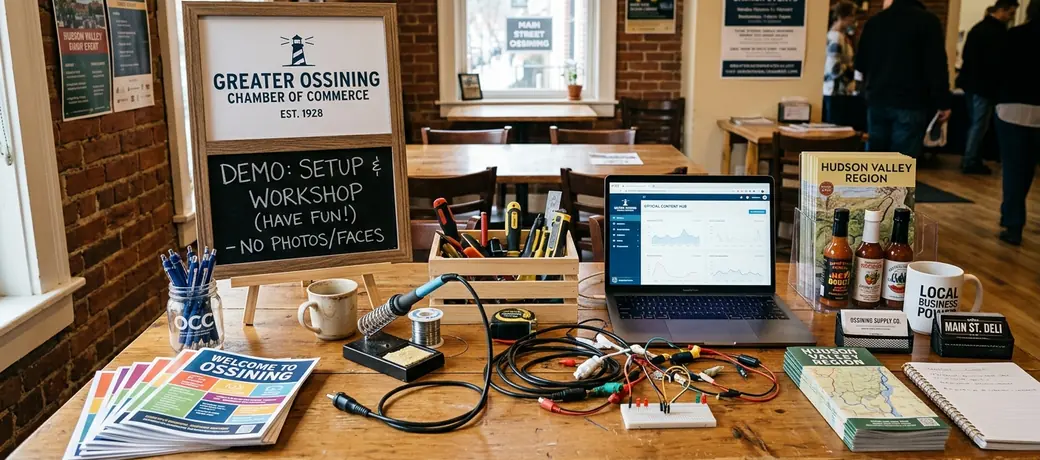
To prevent queue bottlenecks, staff managed the participation cycle time to 90 to 120 seconds per person. Active participants received a useful outcome. The store prepared an inventory of 250 to 300 physical redemption tokens for distribution.
Hardware Booth Staffing Reality: High-touch interactive booths require a minimum of three trained staff members present at all times to manage crowd flow and safety. While this staffing model proved effective for a mid-sized retailer, smaller storefronts often lack the personnel to safely manage simultaneous demonstrations and crowd control.
Turning an Encounter Into a Store Visit
The marketing coordinator created a segmented follow-up sequence specifically referencing the booth demonstration to maintain contextual relevance. The store designed messages that helped visitors complete, revisit, or apply what they encountered at the fair. Continuity is more credible than an unrelated sales message. The initial follow-up communication was scheduled for dispatch between 48 and 72 hours after the festival concluded.
For visitors holding unredeemed tokens, a secondary reminder message was queued for 10 to 12 days post-event. This sequence relied on a clear attribution mechanism. The physical tokens distributed at the fair served as the intended in-store action trigger, bridging the gap between the outdoor festival and the retail setting.
Results: From Foot Traffic to Loyalty
To isolate campaign impact from baseline seasonal demand, the store cross-referenced the physical tokens redeemed at the register against the digital sign-in timestamps from the booth. The baseline seasonal foot traffic variance calculated at a 12 to 15 visitor daily fluctuation. By isolating conversion tracking to days 3 through 28 following the event, the team measured attributable store traffic.
Drawing on a review of Greater Ossining Chamber of Commerce event records, attribution models break down when in-store staff are not trained to recognize and log event-specific redemption tokens. The hardware store avoided this by preparing their cashiers. The tracking followed a clear funnel—verified booth engagement led to attributable store traffic. The initial customer action of redeeming the token provided the denominator for the visit rate, based strictly on people who consented to follow-up at the digital sign-in tablet. Documented repeat behavior over the subsequent 60 days showed the longer-term value of the interactive approach.
A Replicable Sponsorship Checklist
The resulting framework became a sequential planning document. Future sponsors must define a clear attribution mechanism before securing a vendor space. This pre-event planning timeline requires 4 to 6 weeks of lead time for custom token production and staff training. Sponsors should keep community usefulness and commercial tracking compatible. Participation should never depend on unnecessary data collection. Document assumptions before the event and review actual outcomes afterward, including weak or incomplete evidence.
Sponsorship Attribution Planning Checklist
- Identify one specific, hands-on activity that demonstrates core business expertise.
- Define a single, measurable post-event customer action (e.g., redeeming a physical token in-store).
- Establish a strict attribution window.
Schedule a 15-minute meeting with your floor staff today to select one hands-on demonstration your business can safely execute at the next local festival.









Join the Discussion