


Why Sponsorship Matters in Ossining’s Event Calendar
Sponsorship anchors the civic and commercial life of the community. From seasonal street events to vendor markets and signature local programs, these gatherings rely on local business support to operate. Monitoring reports show seasonal street events typically see foot traffic ranging from 800 to 1,200 attendees over a 4-hour window. Sponsorship is not simply advertising—it is a public-facing association with a community moment, an event organizer, and a specific audience.
For a local business, the case for sponsorship is clear. It supports visibility, goodwill, relationship-building, and event sustainability. However, outcomes depend on fit and execution. A sound approach requires looking past the basic promotional package to understand how your business actually interacts with the crowd.
Start With Fit, Not Package Price
Finding the right sponsorship opportunity requires evaluating four practical dimensions: audience alignment, geographic relevance, brand values, and operational capacity. A restaurant, professional service firm, retailer, contractor, bank, health provider, and cultural organization each need different event placements and sponsor benefits to succeed.
Ossining-area events draw different mixes of residents, commuters, families, visitors, civic leaders, vendors, and volunteers depending on location and season. Across outreach cycles, neighborhood block parties frequently draw a hyper-local crowd, with the majority of attendees residing within roughly a 4-mile radius. By contrast, commuter-focused morning activations generally see peak engagement in about a 45- to 65-minute window. A professional service firm may find significantly more return on investment sponsoring a quiet, targeted networking breakfast of around 50 people than a loud, family-oriented weekend festival with attendance listed at 2,000 in published outcome summaries.
How to Evaluate an Event Opportunity
Before committing funds, businesses need a practical evaluation process. You must assess the event purpose, date and time, location, expected activities, sponsor category limits, vendor rules, weather plan, and the organizer's communication process. Ask specific questions about the audience demographics and the exact benefits included in the package.
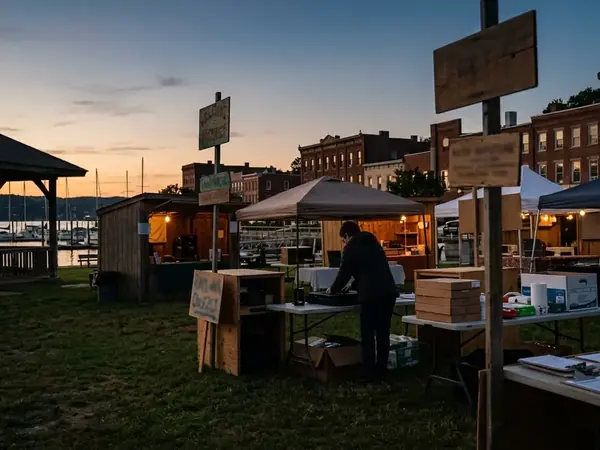
Understand the physical constraints of the opportunity. Standard vendor spaces are typically allocated in 10-by-10-foot footprints. Organizers also usually cap category exclusivity to 1-2 sponsors per industry to maintain vendor diversity. Recognize the difference between passive exposure and active engagement. A logo on a flyer functions differently than a staffed table, sample distribution, raffle participation, or hosted activity.
Budget Beyond the Logo
The true cost of sponsorship extends far beyond the direct fee. You must account for staff time, printed materials, giveaway items, table setup, product samples, insurance needs, transportation, and post-event follow-up. Hidden operational costs often include staff scheduling, weekend coverage, credit card processing, inventory, signage, rain protection, extension cords, and setup materials.
Initially, local organizers considered standardizing sponsorship tiers across all seasonal markets to simplify billing. However, this approach was discarded after a pilot phase revealed that a flat-fee structure ignored the vast differences in operational costs for different types of activations. Across comparable initiatives, temporary event insurance riders typically cost between $150 and $225 for a single weekend. Staffing a booth adequately often requires 3-5 hours of employee overtime pay per event day.
A lower-tier sponsorship with a strong activation plan—like a staffed sample station, can sometimes be more useful than a higher-tier logo-only placement. Investing heavily in a top-tier logo placement at a high-traffic street fair but failing to staff the physical booth routinely results in close to zero captured leads or meaningful community interactions.
Turn Benefits Into an Activation Plan
Common sponsor benefits include website listings, event signage, printed program mentions, social media acknowledgements, booth space, category exclusivity, speaking acknowledgments, and volunteer shirts. You must translate each benefit into a specific action. Prepare a booth script, a QR code destination, an appointment form, a coupon card, a sample station, a photo-friendly display, or a community activity.
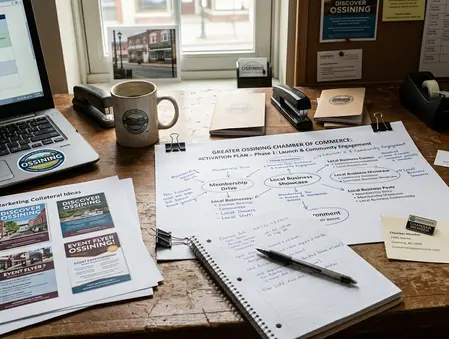
Program evaluation showed a clear contrast in engagement methods. Staffed booths with interactive elements average 12-18 QR code scans per hour. Unattended banners typically yield only 2-4 scans over an entire afternoon. To secure guaranteed placement, finalizing promotional artwork should occur 21-28 days prior to the event to accommodate printing delays.
Choose one clear event objective. Decide whether you want to meet prospects, thank existing customers, recruit employees, support a cause, launch a seasonal offer, or deepen civic visibility alongside the Greater Ossining Chamber of Commerce.
Coordination, Rules, and Risk
Practical coordination dictates the success of the day. Pay close attention to deadlines, artwork specifications, logo file formats, setup windows, load-in instructions, table assignments, power availability, parking, waste handling, and your primary contact person. Load-in and setup windows are strictly enforced, usually limited to 90-120 minutes before public opening. On-site power availability is often restricted to standard 15-amp circuits per vendor block.
Do not assume you can distribute food, sell products, run raffles, use amplified sound, serve alcohol, or place signs without organizer approval. Community celebrations often require organizers to secure municipal approvals 60-90 days in advance. Staff schedules and emergency contact lists must be confirmed 10-14 days out.
Caution: Municipal noise ordinances and vendor permit waivers apply strictly to the designated event footprint; extending an activation even 10 feet beyond the permitted zone requires a separate commercial activity application.
Requirements vary by location, organizer, permit conditions, and year. Always consult the official Village of Ossining information for current municipal guidelines.
Measure What You Can Actually Track
Effective measurement relies on tracking tangible interactions rather than guessing at brand awareness. Track contacts gathered, conversations held, appointments booked, coupon redemptions, QR visits, newsletter signups, partnership introductions, and post-event inquiries. Understand the difference between immediate sales, relationship value, civic goodwill, and long-term brand familiarity.
Stakeholder feedback indicates that post-event email outreach is most effective when executed within a 48-72 hour window. Coupon redemption tracking should be monitored over a 7-10 day period following the event.
Expert Tip: Use simple tracking tools to capture data on-site. A unique landing page, an event-specific code, a paper signup sheet, a CRM tag, or a staff debrief form will provide clear metrics without requiring complex software.
Scope and Limitations
This guide helps local businesses plan and evaluate sponsorships, but it does not replace organizer terms, municipal rules, legal review, insurance advice, or tax guidance. Sponsor value varies by event type, weather, turnout, location, staff preparation, competing activities, and audience behavior.
Administrative records show that sponsorship receipts and W-9 documentation are generally issued within 14-21 days post-payment. However, permit conditions for public space usage are subject to change up to 72 hours before the event due to weather or safety mandates. The roles of the Chamber, the organizer, and civic partners differ by event. A confirmed sponsor should always confirm who controls benefits, logistics, permits, and communications for the specific gathering.
Main Point: While this framework provides a structured method for evaluating local event selection, it cannot account for sudden shifts in municipal zoning enforcement. Always verify current site rules directly with the event coordinator.



Join the Discussion