

Quick Nav:
- Why the Riverfront Requires a Plan
- Read the Event Listing Like a Checklist
- Arrival, Parking, and Transit
- Seating, Comfort, and What to Bring
- Food Vendors and Local Stops
- Family-Friendly Habits and Event Etiquette
- Weather, Cancellations, and Backup Plans
- Make It a Full Ossining Evening
Why the Riverfront Requires a Plan
“How do you plan a relaxed summer concert evening on the Ossining riverfront before parking, weather, food, and children become last-minute problems?”
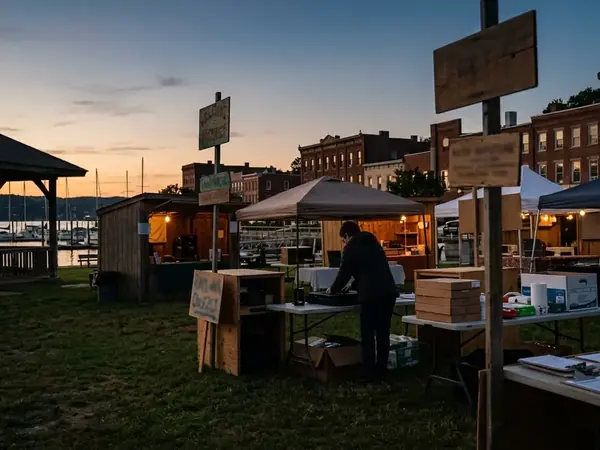
Start with the setting. A summer evening along the Hudson River is not the same object as a ticketed indoor performance or a quick downtown stop. The riverfront has open sky, moving air, grass underfoot, families spreading out on blankets, and arrival paths that narrow as people converge near the same parks, crossings, and transportation corridors.

The appeal is precisely what complicates it. Sound travels differently outdoors. A warm afternoon can become a cool evening fast. The sun sits low before sunset, then the light drops quickly. People arrive in clusters because the public program has one posted start time.
The first principle: remove decisions from the sidewalk
The practical work happens before leaving home. Decide how to arrive, where to sit, what to eat, and what conditions would make you leave early. That sounds formal for a concert, but it keeps the evening from being governed by small frictions.
In Greater Ossining Chamber of Commerce event-planning notes, one recurring pattern is clear: waterfront comfort turns on preparation more than luck. Temperatures along the waterfront can drop 8 to 12 degrees Fahrenheit within 45 minutes of sunset because of the river breeze. That one fact explains why shorts, an empty tote, and a phone at low battery can turn a pleasant program into a retreat.
Read the Event Listing Like a Checklist
An event listing is not just an announcement. Read it as a field document.
Before leaving, identify the event name, start time, performer or activity type, exact waterfront location, rain policy, vendor notes, sponsor activity, and any posted restrictions. The wording matters. A concert, civic celebration, family activity, sponsor table night, nonprofit gathering, and food-vendor program can all occupy similar space near the water, but they do not ask the same things of an attendee.
What changes by event type
A music program may reward early seating and a low chair. A family activity may require wipes, snacks, and a clear meeting point. A civic celebration may include short remarks, booths, and heavier foot traffic around information tables. A food-centered evening changes the timing because the line becomes part of the event.
Vendor rosters for summer waterfront listings typically finalize 48 to 72 hours before the start time. That timing is not a defect in planning; it reflects the moving parts of outdoor programs, permits, staffing, and weather-sensitive commitments.
Before you go
- Time: Confirm the start time and check whether the program has a posted end time.
- Location: Verify the exact waterfront destination, not just “the riverfront.”
- Transportation plan: Decide whether to drive, walk, ride-share, or use the train.
- Seating plan: Choose a blanket, low-profile chair, or standing plan.
- Food plan: Decide whether to use vendors, nearby restaurants, or permitted snacks.
- Child needs: Pack simple comfort items and set boundaries before the crowd thickens.
- Weather layer: Bring a light layer even if the afternoon feels warm.
- Payment method: Carry a card and some cash.
Main Point: The listing tells you the shape of the evening. Treat each line as a decision you can make before the crowd arrives.
Arrival, Parking, and Transit
The sequence should be simple: identify the waterfront destination, decide how you will get there, and build in time for the final approach. The last step is the one people underestimate.
The Ossining Metro-North station is an important landmark near the waterfront, and it helps orient visitors who are arriving by train, walking from nearby areas, or meeting others after work. It also means the riverfront is tied to rail activity, road crossings, pedestrian movement, and event traffic at the same time.
Driving requires a different kind of patience
Drivers should expect demand to concentrate near posted start times. Follow temporary signs, posted parking rules, and direction from municipal or event staff. If a lot looks full, circling slowly near the most crowded approach rarely solves the problem; it usually adds another vehicle to the knot.
During the 2022 summer season, organizers considered a mandatory off-site shuttle system from upland municipal lots to reduce waterfront congestion. The idea had surface logic. It separated parking from the riverfront and promised a cleaner flow. The harder question was whether it added another timed dependency for families, older adults, vendors, performers, and visitors carrying chairs or coolers. The planning lesson was not that shuttles are bad. It was that every transportation fix has a second-order effect at ground level.
Peak arrival congestion typically occurs roughly 15 to 25 minutes before the scheduled start time, often backing up traffic at the waterfront grade crossings. If you dislike that pressure, arrive before that window or plan to enter after the first rush has passed.
Expert Tip: Choose your transportation plan before checking the weather a final time. Weather may affect what you carry, but the route decision should not be improvised at the curb.
Seating, Comfort, and What to Bring
Waterfront seating has its own ethics. The basic question is not only “Where can I see?” but “What does my setup do to the people behind and beside me?”
Low-profile folding chairs work well because they create comfort without building a wall. Picnic blankets suit families and groups that expect children to sit, snack, stand, and return. Compact bags help keep walkways and grass edges passable. Strollers need thought: useful for the trip in, awkward if they become a barrier once the music starts.
Pack for the river, not the afternoon forecast
The Hudson River setting changes comfort in several ways. Sun angle can be sharp before sunset. Wind off the water can turn a loose napkin into a chase. Evening temperatures cool quickly. Grass can feel damp even when the day was dry. Light shifts from bright glare to dim paths faster than many people expect.
Low-profile chairs with a seat height of about 9 to 12 inches from the ground help preserve sightlines for attendees seated on blankets behind them. That small design choice does more than improve one person’s comfort; it keeps the shared viewing field workable.
Waterfront Concert Packing Checklist
- Seating: Low-profile folding chair under a 12-inch seat height, or a waterproof-backed picnic blanket.
- Apparel: Light windbreaker or sweater for post-sunset cooling.
- Sustenance: Reusable water bottle and permitted snacks.
- Skin and comfort: Sunscreen, insect repellent, and wipes.
- Cleanup: Small trash bag for your own area.
- Power: Portable phone battery.
- Health: Any needed medication, kept within reach.
One avoidable mistake appears every summer: assuming upland village weather matches the waterfront, then shivering in shorts when the river breeze kicks in.
Food Vendors and Local Stops
Food planning works best when it starts with uncertainty. Not every date has the same vendor lineup. Some evenings may feature food trucks or booths. Others may lean more on nearby restaurants, pre-event dining, or bring-your-own snacks if the event permits them.
That uncertainty has a practical reason. Food vendor availability can fluctuate because of same-day permitting issues, weather exposure, equipment limits, or staffing shortages at local restaurants. At riverfront events, vendor details remain a same-week variable rather than a fixed promise.
Time the food decision
If food is central to your evening, eat early or divide responsibilities. One person can hold the seating area while another checks the line. Families with children should avoid waiting until hunger is already urgent.
During program reviews, food truck lines often peak between 6:15 PM and 6:45 PM, with waits of 18 to 25 minutes. That is long enough to miss the opening portion of a performance and short enough to seem harmless until everyone is already in line.
Bring both a card and some cash. Mobile point-of-sale systems frequently lose connectivity near the riverbank, so a digital payment may fail even when a vendor officially accepts it.
Allergies and dietary needs
Ask vendors directly about ingredients and preparation. Outdoor menus are often simplified for speed, and the person taking payment may be handling a rush. A calm, specific question before ordering protects everyone better than a broad assumption about what a menu item usually contains.
Caution: If a dietary restriction is serious, do not rely on menu shorthand alone. Confirm ingredients and preparation at the point of sale.
Family-Friendly Habits and Event Etiquette
A family-friendly evening is designed in small habits, not large speeches. Choose a meeting point before settling in. Photograph the location where you set up, especially if the crowd is still sparse when you arrive. Give children simple boundaries they can remember: the blanket edge, the nearest tree, the path they should not cross without an adult.
Keep essentials within reach. Wipes, water, medication, a phone, and a light layer should not be buried under chairs and bags. When a child needs something, the crowd is usually least convenient.
Space is shared, even when it feels informal
A standard picnic blanket setup for a family of four occupies roughly 35 to 40 square feet of grass. That number gives substance to etiquette. A blanket is not just a rectangle of fabric; it is a claim on public space, and the claim should stay reasonable.
Concerts invite enthusiasm. They also bring neighbors, children, older adults, working vendors, performers, and people who simply want to sit quietly near the water. The civic habit is balance: enjoy the program without treating the public setting as private territory.
Pets need permission and preparation
Bring animals only if the event allows them. If pets are permitted, keep leashes short, carry water, and bring cleanup supplies. A calm dog in an open park can behave very differently when surrounded by speakers, food smells, children, and folding chairs.
Weather, Cancellations, and Backup Plans
Weather near the Hudson can feel different from weather a few blocks inland. Wind, humidity, sun exposure, and temperature shifts become more noticeable at the river’s edge. That difference matters most when conditions are already unstable.
Check same-day updates before traveling if storms, heat, poor air quality, or high winds are possible. Do this close enough to departure that the information still means something. Morning confidence can become late-afternoon doubt.
Decide your threshold before the sky changes
A backup plan should answer four questions. Will you wait? Will you relocate to a local restaurant? Will you switch to takeout and head home? Will you leave early if conditions change during the program?
Those decisions become harder in the moment because people have already parked, children have settled, food has been purchased, and friends have arrived. A plan made in advance reduces the negotiation.
Wind gusts off the Hudson can increase by close to 15 to 20 mph during incoming summer storm fronts, turning unsecured umbrellas into hazards. That is a safety issue, not a comfort preference.
Caution: If storms or high winds are likely, leave umbrellas at home and use wearable rain protection instead.
Make It a Full Ossining Evening
The point of planning is not to make the evening rigid. It is to give the night enough structure that people can actually enjoy the riverfront, the music, the food, and the community around them.
A well-planned concert evening supports more than the stage. Local restaurants see pre-event and post-event activity. Retailers benefit when visitors arrive early. Sponsors and nonprofits gain real conversation time when attendees are not rushing. Vendors serve better when lines are spread out. Public space feels more welcoming when people pack out what they brought in.
A simple evening timeline
- Confirm the listing the same day.
- Arrive early enough to avoid the tightest arrival window.
- Settle your seating area before the busiest period.
- Get food before peak lines if dinner is part of the plan.
- Enjoy the program with attention to neighbors and shared space.
- Pack out carefully, including small trash around the blanket or chairs.
- Leave patiently rather than joining the first surge.
Main Point: Confirm the listing, arrive with a transportation plan, pack for waterfront conditions, support local vendors, and respect shared public space.
The final act of the evening is not the last song; it is the exit, and packing up and leaving the waterfront area generally takes around 20 to 30 minutes after a concert because of pedestrian bottlenecks at the train station overpass.











Join the Discussion